Cute Dog Patterns Vol. 02: A Strategic Asset for Purpose-Driven Design
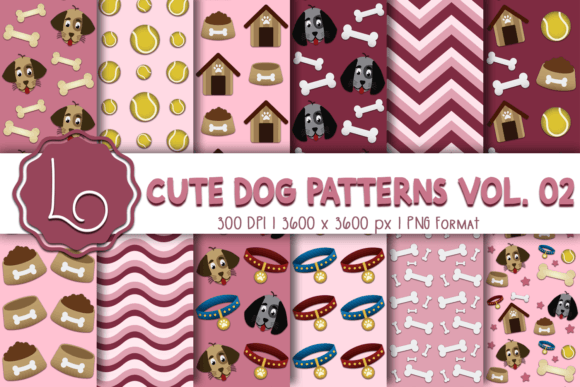
High-quality, ready-to-deploy visual assets like Cute Dog Patterns Vol. 02 are more than decorative elements—they’re operational tools. This set of 12 original patterns—delivered at 3600 × 3600 px, 300 DPI, and in transparent PNG format—offers consistency, scalability, and creative flexibility without compromising fidelity. For professionals who rely on precision in execution—from product designers launching pet-themed merchandise to educators developing engaging classroom materials—the strategic value lies not in cuteness alone, but in how deliberately the patterns integrate into broader goals.
Why Resolution and Format Matter More Than You Think
At first glance, “300 DPI” and “PNG” may seem like technical footnotes. In practice, they define usability boundaries. A 300 DPI resolution ensures sharp reproduction across physical outputs: sublimated mugs retain fine line clarity; t-shirt prints avoid pixelation at scale; book hardcovers preserve texture and contrast under press conditions. The PNG format—with its alpha channel support—means no time wasted removing backgrounds or adjusting layers in post-production. That translates directly into faster iteration cycles, fewer revision rounds, and lower opportunity cost per project.
Consider a small-batch apparel brand planning a limited “Paws & Celebrate” collection for National Dog Day. Using Cute Dog Patterns Vol. 02, the team can apply one pattern across six SKUs (t-shirts, tote bags, enamel pins, stickers, packaging inserts, and digital launch assets) while maintaining cohesive visual language—without commissioning custom illustrations for each item. That’s not just efficiency; it’s intentional brand stewardship.
Strategic Use Cases Beyond Decoration
Design assets succeed when aligned with purpose—not aesthetics alone. Here’s where Cute Dog Patterns Vol. 02 delivers measurable utility:
- Customer Experience Anchors: Retailers use consistent pattern motifs across packaging, thank-you cards, and unboxing inserts to reinforce emotional connection. A dog-themed subscription box for pet owners, for example, leverages familiarity and warmth—not as gimmick, but as continuity signal.
- Educational Material Differentiation: Teachers and curriculum designers embed these patterns into printable worksheets, flashcards, or digital lesson slides. The visual rhythm supports attention retention—especially for younger learners or neurodiverse audiences—without competing with content hierarchy.
- Brand Extension Without Dilution: A veterinary clinic launching a wellness blog or community newsletter can use subtle pattern accents in headers, dividers, or downloadable PDF guides. It reinforces identity without overwhelming medical credibility.
- Digital Product Scalability: App developers building pet-care tracking tools or social platforms for dog lovers incorporate pattern-based UI elements (e.g., loading animations, empty-state illustrations, or section dividers) that feel playful yet professional—reducing cognitive load through visual predictability.
When to Reach for Cute Dog Patterns Vol. 02—and When Not To
This set excels in scenarios requiring speed, thematic alignment, and cross-platform adaptability. It is less suited for projects demanding bespoke narrative depth—such as storytelling-driven picture books or brand origin campaigns where unique character development is central. The distinction matters: using Cute Dog Patterns Vol. 02 to accelerate production is sound strategy; using it to substitute for audience insight or brand positioning is misalignment.
A freelance graphic designer pitching to a boutique pet bakery might deploy Pattern #7 (a playful paw-and-bone repeat) across cupcake wrappers, Instagram story templates, and loyalty program badges—creating instant recognition. But if the client’s core differentiator is artisanal sourcing and sustainability, over-indexing on cuteness risks obscuring substance. In that case, the pattern becomes an accent—not the message.
Planning Your Implementation Intentionally
Before importing any file from Cute Dog Patterns Vol. 02, ask three questions:
- What outcome does this serve? Is it increasing perceived value (e.g., premium packaging), reducing friction (e.g., intuitive digital navigation), or reinforcing memory (e.g., recurring motif in event branding)?
- Where will fidelity be tested? Will it appear on matte paper, glossy smartphone cases, or woven fabric? Review your output specs against the 3600 × 3600 px baseline—if your largest intended use is 1200 px wide, you have 3× resolution headroom for cropping, scaling, or layering without degradation.
- How does it relate to existing assets? Does it complement current color palettes? Does its line weight match typography choices? Does its energy level align with tone-of-voice guidelines? Consistency compounds impact; dissonance dilutes it.
One practical tip: create a “pattern palette” document early in a project. Assign each of the 12 patterns a primary use case (e.g., “#3 = background for invitations,” “#9 = border for craft tags”), note compatible colors, and flag any that require minor recoloring in your editing software. This prevents decision fatigue mid-production and surfaces gaps—like realizing you need a monochrome variant for embroidery files—before finalizing layouts.
Risks of Unstructured Adoption
Without clear intent, even high-quality assets can backfire. Randomly applying Cute Dog Patterns Vol. 02 across unrelated projects fragments perception. A financial advisor using dog motifs on retirement planning brochures may unintentionally undermine seriousness—even if the design is technically polished. Similarly, overusing the same pattern across multiple client brands erodes differentiation and risks visual fatigue among repeat audiences.
Another risk is operational oversight: assuming PNG transparency eliminates prep work. While true for most digital uses, some print vendors require flattened CMYK files with embedded spot colors or specific bleed configurations. Always validate file requirements with your production partner *before* finalizing artwork—don’t assume universal compatibility.
Long-Term Value Through Repurposing Discipline
The real ROI of Cute Dog Patterns Vol. 02 emerges over time—not per project, but across iterations. A craft supply retailer might use Pattern #2 on seasonal gift tags in spring, then invert its colors and layer it subtly behind product photography in autumn catalogs. A children’s publisher could adapt Pattern #5 into a custom font underline style for chapter headings in a new illustrated series. These aren’t one-off uses; they’re nodes in a visual system that grows more efficient with each application.
That discipline pays dividends in two ways: first, in reduced asset licensing costs (no need to repurchase similar motifs); second, in strengthened audience recognition. Customers begin to associate that particular paw-print rhythm or bone-repeat density with reliability—just as they do with trusted typography or signature color combinations.
Final Thought: Tools Serve Strategy, Not the Reverse
Cute Dog Patterns Vol. 02 is not a shortcut. It’s a lever—one that multiplies effort when applied with clarity of purpose. Its 12 patterns offer variety, but their collective strength lies in shared technical rigor and thematic cohesion. Whether you’re prototyping a new product line, refreshing educational resources, or building a micro-brand around pet wellness, let the patterns support decisions—not drive them. Prioritize goals first. Then reach for the tool that helps you execute them precisely, consistently, and well.