Dessert Patterns. Sweets and Coffee
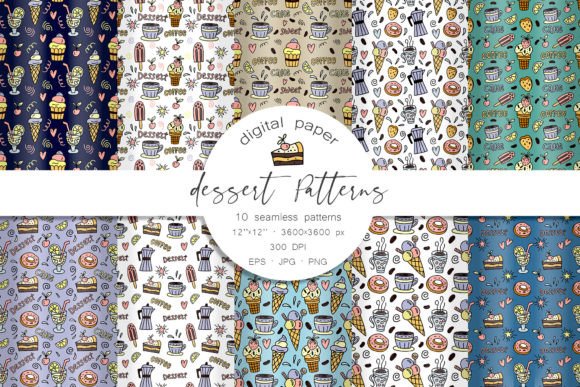
Thoughtful visual design begins not with aesthetics alone—but with intention, utility, and alignment. Dessert Patterns. Sweets and Coffee is more than a collection of charming motifs; it’s a strategic asset for professionals who understand that pattern choice shapes perception, supports messaging, and quietly reinforces brand identity across touchpoints. Whether you’re launching a boutique bakery’s packaging, designing an inclusive kids’ room mural, building a wellness blog’s seasonal email series, or developing textile prototypes for a sustainable fashion line, these seamless patterns offer precision, flexibility, and professional-grade execution—without requiring custom illustration time or licensing overhead.
Why Seamless Dessert Patterns Matter Strategically
Seamless patterns are foundational infrastructure—not decoration. Unlike standalone graphics, they scale infinitely, adapt to variable dimensions, and maintain visual cohesion across formats: a 12×12 inch fabric swatch, a full-screen web background, or a 3600×3600 px print-ready wallpaper. With Dessert Patterns. Sweets and Coffee, that scalability comes paired with thematic resonance. Cupcakes, lemonade, espresso cups, and layered cakes aren’t just “cute”—they evoke warmth, celebration, pause, indulgence, and care. That emotional subtext matters when positioning a product, service, or space. A pediatric therapist using these patterns in printable therapy worksheets signals approachability. A coffee subscription brand applying them to unboxing inserts reinforces sensory branding before the first sip.
The inclusion of vector EPS files means color adaptation isn’t guesswork—it’s controlled iteration. You’re not stuck with pre-set palettes. You can align every element with your existing brand system: shift pastel icing tones to match your healthcare startup’s calming palette, or deepen coffee-brown gradients to reflect the sophistication of a premium tea brand. That level of control transforms pattern use from decorative afterthought into intentional communication.
Where These Patterns Deliver Real Operational Value
Consider the cumulative time saved across common workflows:
- Small business owners preparing party kits or subscription boxes avoid commissioning custom illustrations—cutting lead time by days and cost by hundreds.
- Educators and therapists generate themed printable resources (e.g., emotion-identification cards with ice cream scoops representing feelings) without compromising visual clarity or accessibility.
- Textile designers test repeat behavior and scale responsiveness directly in Adobe Illustrator using the EPS files—before committing to costly fabric sampling.
- Web designers implement lightweight PNGs with transparent backgrounds as subtle, non-distracting backgrounds for call-to-action sections—enhancing scannability without slowing load times.
- Marketing teams maintain consistency across digital ads, social banners, and printed event signage using the same base pattern—reinforcing recognition without visual fatigue.
This isn’t about speed at the expense of quality. It’s about reducing friction in execution so you can invest more energy where it counts: refining your message, understanding your audience, or improving user experience.
Using Dessert Patterns. Sweets and Coffee With Purpose—Not Just Pattern
Random application dilutes impact. A cupcake motif on a corporate financial report undermines credibility. A high-contrast coffee bean pattern behind dense legal text reduces readability. Intentional use starts with asking three questions:
- What outcome do I want this visual element to support? (e.g., “I want parents to feel the nursery is joyful but restful” → choose softer lemonade or cake patterns over bold, high-saturation ice cream repeats.)
- What context will this appear in—and what’s already competing for attention? (e.g., a t-shirt design needs strong contrast and clear negative space; use the JPG files at 300 DPI to preview how motifs hold up at garment scale.)
- Does this reinforce—or contradict—the values my audience associates with my work? (e.g., a zero-waste food brand might prioritize muted, earthy recolors of the tea or lemonade patterns—not candy-colored cupcakes—to signal authenticity over whimsy.)
Also consider scale discipline. The 12×12 inch JPG files are ideal for mockups and client presentations—but if you’re designing for apparel, test how the repeat aligns across seams using the vector EPS files in your layout software. If you’re creating digital paper for scrapbooking, the transparent-background PNGs let you layer textures or typography without clipping masks.
Risks of Using Dessert Patterns Without Strategic Alignment
Patterns carry cultural and contextual weight. Overuse—especially of sugary motifs—can unintentionally signal immaturity, excess, or lack of sophistication. In B2B contexts, such visuals may clash with expectations of authority or precision. Similarly, applying dessert themes universally across all customer touchpoints risks flattening nuance: a birthday card benefits from exuberant cupcake repeats; a grief support resource does not.
Another practical risk lies in technical assumptions. While all files are 300 DPI, the PNGs include transparency—which is essential for layered digital work but unnecessary (and potentially problematic) for CMYK-printed packaging. Always verify color mode and bleed requirements with your printer before finalizing. And remember: seamless doesn’t mean invisible. Poorly scaled repeats draw attention to themselves—not your content. Preview at actual size, not thumbnail.
Long-Term Value Beyond the ZIP Folder
The real ROI of Dessert Patterns. Sweets and Coffee emerges over time—not in a single project, but across iterations, rebrands, and expanding offerings. Because the files are editable vectors and high-resolution rasters, they grow with your business. That same lemonade pattern used in a summer social campaign can be recolored and repurposed for a back-to-school educator resource pack. The espresso cup repeat that anchors your café’s loyalty program can evolve into a subtle watermark on staff training materials—creating internal cohesion without redesign costs.
For freelancers and agencies, having a vetted, rights-cleared pattern library shortens discovery phases for clients in food, education, wellness, and lifestyle sectors. It builds trust: you’re not improvising—you’re deploying tools calibrated for purpose. And because the set includes both raster and vector formats, you’re prepared whether the need is fast-turnaround social graphics or production-grade textile development.
Practical Planning Tips Before You Download
Before opening the ZIP folder, clarify your immediate use case:
- If designing for print: Prioritize the JPG and EPS files. Confirm your software supports EPS import (or convert to AI/SVG if needed). Check whether your printer requires embedded fonts or outlined text—vector patterns simplify that step.
- If designing for digital products (websites, apps, e-learning): Use the transparent PNGs. Test loading performance—especially if applying as full-page backgrounds. Consider compressing without sacrificing clarity using modern tools like Squoosh or ImageOptim.
- If developing physical goods (t-shirts, tote bags, wallpaper): Import EPS files into your pattern-making workflow. Adjust repeat spacing to match fabric grain or wallpaper drop specifications. Simulate lighting conditions—matte vs. glossy finishes affect how icing sheen or coffee steam reads.
- If supporting education or therapeutic goals: Print the PNGs at 300 DPI on matte cardstock. Avoid overly busy repeats for younger children or neurodiverse users—opt instead for lower-density cake or tea patterns with generous negative space.
Finally, treat the collection as a starting point—not a finish line. Recolor, crop, layer, or isolate elements. Combine a lemonade motif with your original line art. Use the cupcake outline as a frame for photo content. Let the patterns serve your goals—not the other way around.
When visual assets align with strategy, they stop being “just design” and become part of your operational advantage. Dessert Patterns. Sweets and Coffee gives you the raw material. Your clarity of purpose determines what you build with it.