Black and White Seamless Vector Patterns: A Practical Resource for Design Consistency and Versatility
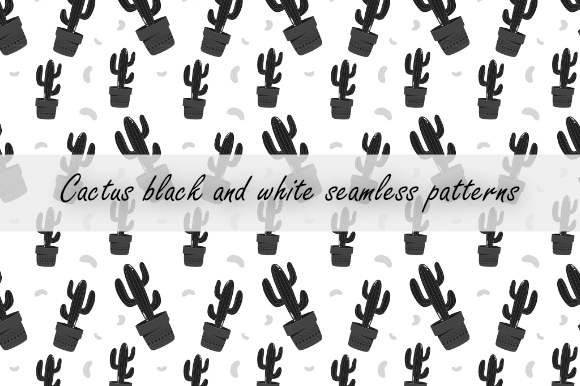
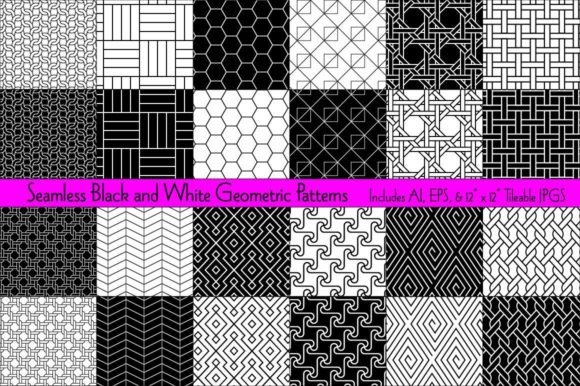
Black and white seamless vector patterns offer a focused, high-functioning asset set for designers who prioritize clean aesthetics, technical reliability, and cross-application flexibility. This particular collection—24 geometric patterns, each delivered at 12 × 12 inches—stands out not for novelty or trend-chasing, but for its disciplined execution and thoughtful file architecture. It’s built for real workflows: from print production to digital mockups, from rapid prototyping to client-facing deliverables.
What You’re Actually Getting—and Why File Structure Matters
The package includes three parallel formats for each of the 24 patterns: editable Adobe Illustrator (.AI), industry-standard EPS (.EPS), and tileable JPGs sized precisely to 12 × 12 inches. That consistency in dimension isn’t arbitrary—it aligns with common paper, fabric, and substrate standards used in gift wrap, scrapbook paper, textile sampling, and stationery manufacturing. More importantly, every AI and EPS file contains two layers: one with the expanded, fully editable pattern (paths, strokes, anchors intact), and another with a pre-saved swatch. This dual-layer approach saves time during both customization and implementation—no need to rebuild swatches or manually expand patterns before editing or applying them to objects.
The JPGs are not just exported previews. They’re genuinely tileable at the stated dimensions, meaning they repeat without visible seams when placed edge-to-edge in layout software or web CSS backgrounds. That reliability matters most when scaling across large surfaces—think wallpaper mockups, fabric repeats, or full-bleed packaging designs—where misaligned edges would undermine professionalism instantly.
Strengths in Practice: Where These Patterns Deliver Real Value
Geometric black and white patterns excel where clarity, contrast, and scalability are non-negotiable. Unlike tonal or textured repeats, these rely on shape, rhythm, and negative space—qualities that hold up equally well at 8-point stationery borders or 10-foot wall decals. Because all elements are vector-based, resizing introduces no pixelation, loss of sharpness, or color shift. That’s critical for branding applications where logo-aligned pattern extensions must retain fidelity across business cards, letterhead, and trade show banners.
The monochrome palette also supports accessibility and reproduction accuracy. Black and white eliminates concerns about CMYK-to-RGB conversion errors, ink bleed on uncoated paper, or screen calibration variance. For small-batch printers or home-based crafters using inkjet or sublimation systems, this means fewer test prints and more predictable output—especially important when producing custom gift wrap or limited-run textile samples.
Who Benefits Most—and How They Use It
Freelance surface pattern designers use these as foundational references or starting points for client-specific adaptations—tweaking spacing, rotating motifs, or layering with custom illustrations. Educators incorporate them into typography or layout courses to demonstrate repeat structure, grid alignment, and visual hierarchy without color distraction. Small business owners launching greeting card lines or handmade home goods find immediate utility: a single pattern can become wrapping paper, label background, tote bag print, and Instagram story template—all while maintaining cohesive brand language.
Marketing teams building product launch kits appreciate how easily these patterns integrate into Canva, Figma, or InDesign templates. Since each JPG is tileable and each vector file retains full editability, adapting a motif for email headers, social banners, or PDF pitch decks requires minimal rework. Bloggers and content creators focused on design, productivity, or maker culture often license or reference such assets for tutorials—knowing their audience values transparency, reproducibility, and tool-agnostic usability.
Realistic Considerations and Workflow Fit
This isn’t a “one-click magic” toolkit. The patterns are intentionally geometric and minimalist—not illustrative, organic, or hand-drawn—so they won’t suit projects requiring warmth, whimsy, or narrative texture. If your work leans heavily into watercolor effects, botanical line art, or distressed grunge aesthetics, this set serves a different purpose: structural precision over expressive variation.
Also worth noting: while the 24 patterns cover a useful range—dot grids, interlocking triangles, tessellated hexagons, linear chevrons, concentric circles, and angular lattices—they don’t include gradients, halftones, or variable stroke weights. That’s by design. The focus remains on crisp, scalable repetition—not stylistic experimentation. Users needing those variations would layer these patterns with other assets rather than expect them built-in.
In terms of long-term value, the editable vector files ensure adaptability beyond current software versions. EPS compatibility extends support to older design environments, while AI files accommodate modern features like global colors and appearance attributes. And because all patterns share the same tile size and naming convention (e.g., Pattern_07.ai, Pattern_07.jpg), version control, asset management, and team handoffs remain straightforward—even across distributed creative teams.
Practical Recommendations for Integration
Start by testing one pattern in your most frequent use case: if you design packaging, apply it to a dieline mockup and check tiling behavior at actual print size. If you create digital templates, drop the JPG into a Figma frame set to “repeat-x/y” and verify seamlessness at zoom levels from 25% to 200%. For textile applications, import the EPS into textile design software like Kaledo or Optitex to confirm repeat integrity across fabric width calculations.
When customizing, leverage the layered AI files intentionally: use the swatch layer for quick application to shapes, then toggle to the expanded layer only when adjusting anchor points or modifying stroke profiles. Avoid converting the vectors to outlines unless necessary—keeping paths live preserves future editability, especially if sharing files with collaborators using different Illustrator versions.
Finally, treat the JPGs as production-ready fallbacks—not placeholders. Their 300 PPI resolution and exact 12 × 12 dimensions mean they function reliably in print-on-demand platforms (like Printful or Gooten) and digital storefronts where upload specs are strict and automated.
A Resource That Scales With Your Work
Black and White Seamless Vector Patterns doesn’t try to be everything. Its strength lies in doing a narrow set of things exceptionally well: delivering technically sound, consistently formatted, immediately usable geometric repeats that behave predictably across media and software. It supports efficiency without sacrificing control, simplicity without limiting scope. For professionals who regularly move between branding, print, product, and digital contexts—and who value assets that integrate cleanly rather than demand extensive remediation—this collection functions less like a decorative add-on and more like infrastructure: quiet, reliable, and always ready when needed.